
Medical Weight Loss
How to Preserve Muscle While Losing Weight: A Practical Guide to Strength Training, Protein, and Recovery
Preserving muscle while losing weight is a habit question, alongside the scale. Public activity guidelines ask adults to strengthen major muscle groups on at least two days a week, alongside aerobic activity. A 2026 narrative review adds protein and recovery to that picture for people losing weight, including during GLP-1 treatment.
Why the scale is an incomplete measure
Body weight is one number made of several tissues. The 2026 review, published in Pharmaceuticals, says the scale combines fat, lean tissue, and water. Fat-free mass includes skeletal muscle, water, connective tissue, and organs. Lean tissue on a DXA scan includes more than contractile muscle.
Some loss of non-fat tissue is expected when energy intake falls. The review says incretin medicines, including semaglutide and tirzepatide, generally reduce fat more than lean tissue, and that body-composition studies show neither pure fat loss nor major muscle depletion. In the review's account of the SURMOUNT-1 DXA substudy, roughly three quarters of the tissue lost with tirzepatide was fat and about one quarter was lean mass. That is a human trial substudy of an approved brand, retold in a narrative review.
What the activity guidelines ask adults to do
The CDC's adult activity page restates the Physical Activity Guidelines for Americans. Adults need at least 150 minutes a week of moderate-intensity activity, such as brisk walking, or 75 minutes of vigorous activity, or a mix of the two. They also need muscle-strengthening activity on two or more days a week for the legs, hips, back, abdomen, chest, shoulders, and arms. The CDC page says some activity is better than none, and that the minutes can be split into shorter bouts. It describes going past 150 minutes as bringing further health benefits.
The muscle-strengthening days are the part that matches this question. The aerobic minutes match the guideline's broader activity target.
What resistance-training trials have shown
The 2026 paper is a narrative review of human trials of resistance training during calorie restriction. In older adults with obesity, that training was tied to less lean-mass loss than calorie restriction alone, while body weight and fat still fell. A later meta-analysis of adults with overweight or obesity found total weight change similar to diet alone, with fat-free mass better kept and strength improved. Those trials used diet and training. The review says direct randomized trials of a structured resistance program added to semaglutide or tirzepatide are still limited.
A separate human trial tested exercise with liraglutide during weight-loss maintenance, after a low-calorie diet. The combination kept weight off better than either alone. The medicine was liraglutide, and the sessions mixed aerobic work with muscle-strengthening work.
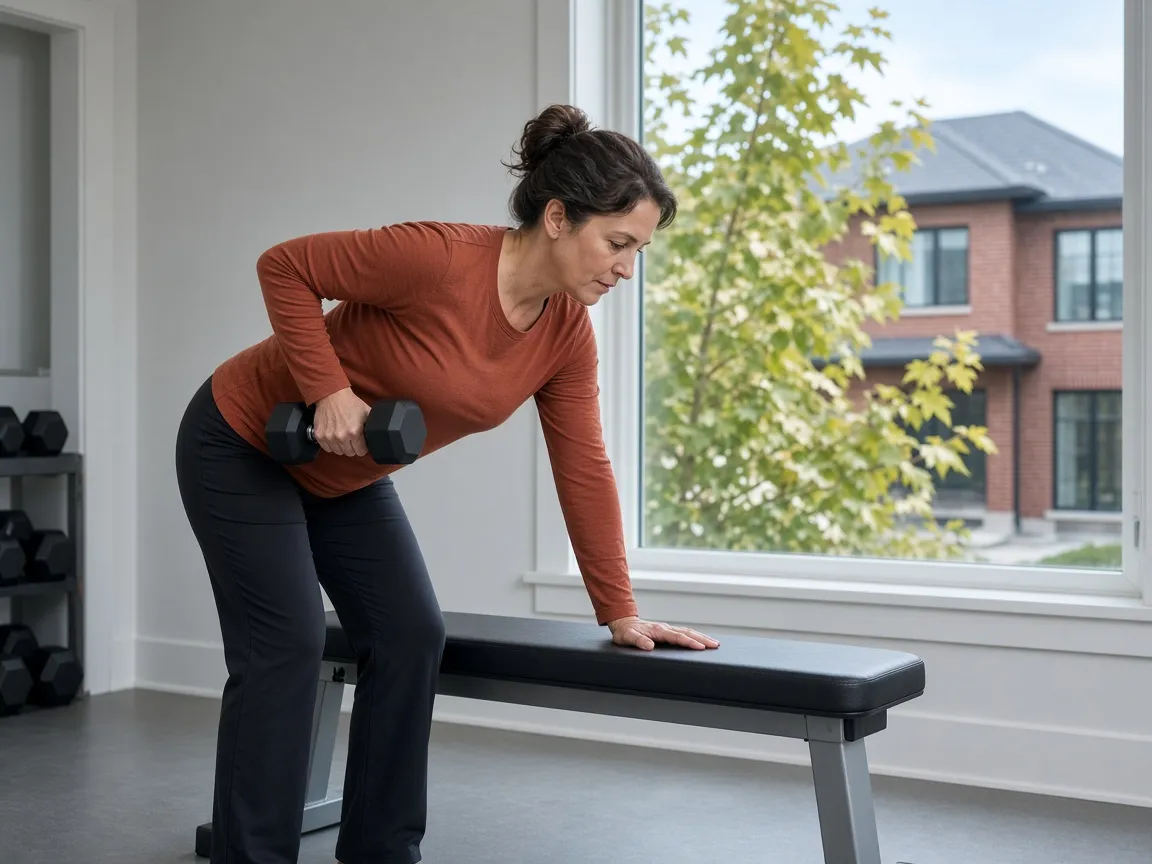
The review's practical translation is whole-body training at least two or three days a week, with progressive resistance and enough effort to matter. Bands, body weight, and a chair-based start are the low-threshold options it names for people who will not begin in a gym. Aerobic activity still fills the guideline's minute target, and resistance work is the step the review ties to lean mass.
Protein when meals get smaller
The same review describes protein as the nutrition step beside training, and it is careful about the number. The Recommended Dietary Allowance of 0.8 grams per kilogram of body weight per day is a floor meant to prevent deficiency in generally healthy adults. The authors say it was not written as a target for holding muscle during weight loss.
They propose a higher working range, about 1.2 to 1.5 grams per kilogram per day, and a higher range for people they class as higher risk, including older adults and people with less muscle reserve. They also say that range is extrapolated from other groups. No large randomized trial has tested it against a lower-protein diet in people taking semaglutide or tirzepatide. More protein was not always better in the studies they cite. A gram figure in a review is commentary on study design, not a dose to take. Age, the size of the energy gap, what you can finish, and whether you train all change the number.
On pattern, the review cites a human feeding study in healthy adults. Protein spread across breakfast, lunch, and dinner raised 24-hour muscle protein synthesis more than the same protein piled into the evening. A meta-analysis the review cites, in adults with overweight or obesity who were losing weight, tied higher protein to a smaller drop in muscle mass. Effects on strength and physical function were less consistent.
When appetite is low, the practical question the review asks is what the person can finish. Dairy, eggs, fish, lean meat, and soy are the foods it names when a meal is small.
Recovery that makes the next session possible
Recovery, in these sources, is the space that lets training and eating continue. The two-or-three-day strength pattern leaves days between sessions. The CDC page says the week's activity can be broken into short bouts, and that some activity is better than none. A missed strength day can stay a walk.
The review also says nausea is not a sign that weight loss is going better. Gastrointestinal symptoms are common with this drug class, especially while a dose is increasing, and they can push eating toward foods that are easy and low in protein. Symptoms that stop eating or training belong with the clinician who knows the medicine.
A beginner week
The list below is one way to arrange a week around the adult guideline while weight is changing.
- Two days of strength work for the legs, hips, back, abdomen, chest, shoulders, and arms. Bands or body weight count. Leave at least one day between those sessions.
- Moderate activity, such as brisk walking, in short bouts across the week, moving toward 150 minutes. A 10-minute walk counts.
- Protein at more than one meal, from foods you can finish. If appetite is small, eat the protein food first.
- On a day you cannot do the strength session, keep the walk. The guideline counts the activity you actually did.
- Notice stairs, carrying a bag, and how the strength sessions feel. Write the scale number beside those notes, not instead of them.
- If nausea, vomiting, or fullness stops you from eating or from training, bring that to the next visit.
| What you watch | What it lines up with |
|---|---|
| The scale | Whether total weight changed. Fat and lean tissue are a separate measurement. |
| Two strength days | The adult guideline's muscle-strengthening minimum. |
| Protein across meals | Intake spread across the day, from foods you can finish. |
| Stairs and carrying | A function check the review says the scale misses. |
During GLP-1 treatment
The review is about GLP-1 receptor agonists and dual incretin medicines such as semaglutide and tirzepatide. Appetite often falls, meals get smaller, and protein can fall with them unless intake is planned. People who are older, already low in strength, or living with sarcopenic obesity are the groups the review flags as having less reserve.
Compounded pairings in this library are a different product from the brands in those studies. Semaglutide + B12 is not Ozempic, Wegovy, or Rybelsus. Tirzepatide + B12 is not Mounjaro or Zepbound.
The Wegovy prescribing information includes a boxed warning about thyroid C-cell tumors seen in rodents. It says it is unknown whether Wegovy causes those tumors, including medullary thyroid carcinoma, in people. It says Wegovy should not be used in people with a personal or family history of medullary thyroid carcinoma, or with Multiple Endocrine Neoplasia syndrome type 2. The Zepbound prescribing information carries a boxed warning in the same terms. Labeled risks are also collected under Risks on the label.
New weakness, a fall, or days of being unable to eat belong with a clinician, as does any change to a medicine. Why muscle matters after 40 covers strength and aging. How GLP-1 medicines support weight management covers the pathway and the labeled risks. What a medical weight-loss program involves describes the visit. How a clinician evaluation works is the general path. Weight loss is the library.
Sources
- Centers for Disease Control and Prevention. Adult activity: an overview. Physical Activity Basics. December 20, 2023.
- U.S. Department of Health and Human Services. Physical Activity Guidelines for Americans, 2nd edition. 2018.
- Sancho-Haro E, Muñoz-López M, Baz-Valle E, et al. Optimizing Weight Loss in the GLP-1 Era: Preserving Muscle Mass, Function and Metabolic Health Through Precision Nutrition and Resistance Training. Pharmaceuticals. 2026;19(6):897.
- U.S. Food and Drug Administration. Wegovy (semaglutide) prescribing information. Application 215256.
- U.S. Food and Drug Administration. Zepbound (tirzepatide) prescribing information. Application 217806.
· . Educational content from Intrinsic Longevity. Clinical decisions are made by licensed providers.
Therapy library
Explore Weight Loss
Semaglutide + B12
A compounded pairing of a GLP-1 medicine and vitamin B12 for a provider-led weight plan.
Tirzepatide + B12
A compounded pairing that adds vitamin B12 to a medicine acting on two gut-hormone receptors.
Why muscle matters after 40
Why muscle matters after 40 explains what human studies show about strength and aging. The weight-loss library is a separate place to browse.
Payment does not guarantee that a prescription will be issued or that medication will be dispensed. A licensed clinician decides whether a prescription is appropriate. Intrinsic Longevity does not manufacture compounded medications.