Peptides & Longevity
The Science of NAD+ and Cellular Aging: How It Works and What Research Really Shows
Aging is more than a gradual change in how we look or feel. At the microscopic level, it involves changes in how our cells produce energy, respond to stress, and maintain genetic information. One molecule involved in many of these processes is nicotinamide adenine dinucleotide, better known as NAD+.
Naturally present throughout the human body, NAD+ is essential to normal cellular metabolism and participates in pathways that researchers investigate in the context of aging. Yet understanding what NAD+ does inside cells is different from knowing whether increasing its availability changes how people age. What does the science actually tell us?
Compounded NAD+ injections and infusions are not FDA-approved. The reactions described below take place inside living cells. Studies in cells or animals, or studies of an oral precursor in people, do not establish that a supplement, injection or infusion reproduces those reactions as a health benefit.
Key Takeaways
- NAD+ is a naturally occurring coenzyme, not a peptide, and is essential to normal cellular energy metabolism.
- NAD+ participates in mitochondrial energy production, DNA damage responses, and cellular regulation.
- Some studies report age-related changes in NAD+ levels, but human findings vary across tissues and populations.
- Oral NAD+ precursors can increase certain NAD-related biomarkers; meaningful clinical outcomes remain inconsistent.
- Compounded NAD+ injections and infusions are not FDA-approved, and their safety and effectiveness for anti-aging or wellness have not been established.
What Is NAD+?
NAD+ is a coenzyme, a molecule that helps enzymes carry out biochemical reactions. Unlike peptides, which are chains of amino acids, NAD+ is a nucleotide-based molecule. Its role in metabolism and cellular regulation explains why it is often discussed alongside peptides in aging research, although it belongs to a different class of molecules.
NAD exists in two forms that are central to energy metabolism: NAD+, the oxidized form, accepts electrons; NADH, the reduced form, carries those electrons. Cells continually cycle between the two as they convert nutrients into usable energy. NAD+ is also consumed by enzymes involved in cellular maintenance and regulation.
How Does the Body Produce NAD+?
The body makes and recycles NAD+ through several biochemical pathways. These use building blocks such as niacin and nicotinamide (forms of vitamin B3), and the amino acid tryptophan. Nicotinamide riboside (NR) and nicotinamide mononucleotide (NMN) also participate in NAD+ biosynthesis.
One important mechanism is the salvage pathway, which recycles nicotinamide released when enzymes consume NAD+. This continuous process helps maintain the NAD+ pool within cells. A review of NAD+ metabolism describes these pathways and their roles in aging research.
How NAD+ Contributes to Cellular Energy Production
Every heartbeat, muscle contraction, and thought depends on energy that cells can use. Much of this energy is supplied by adenosine triphosphate (ATP), often described as the cell’s energy currency. NAD+ plays a central role in the metabolic reactions that make ATP production possible.
NAD+ and Mitochondrial Function
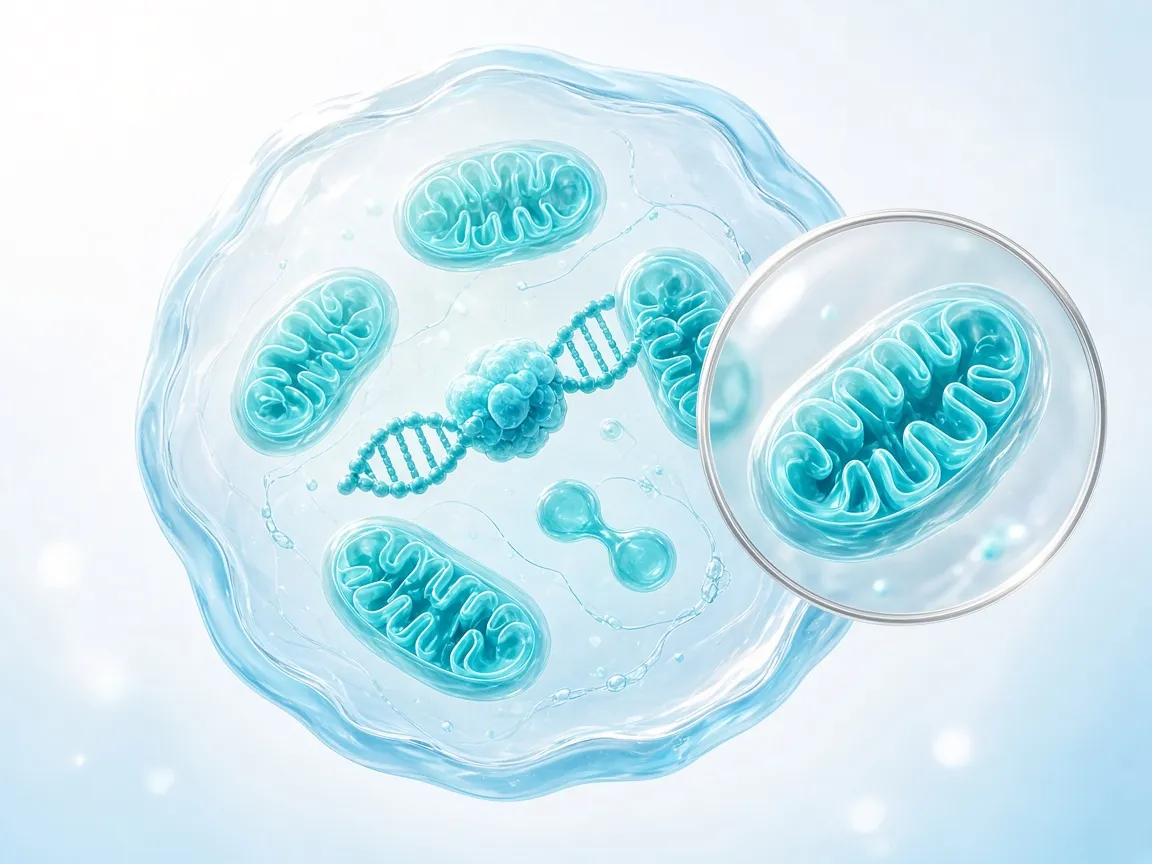
Mitochondria are structures within cells that produce much of the ATP needed for normal cellular activity. As nutrients are broken down, NAD+ accepts electrons and becomes NADH. Mitochondrial NADH then transfers electrons into the electron transport chain, helping generate the gradient that drives ATP production.
- Nutrients are broken down through metabolic pathways.
- NAD+ accepts electrons and is converted into NADH.
- Mitochondrial NADH transfers electrons to the electron transport chain.
- The resulting gradient drives ATP production, which cells use for essential functions.
Think of the electron transport chain as a series of handoffs. Energy released along the way moves protons across the inner mitochondrial membrane. As protons flow back through an enzyme called ATP synthase, the enzyme makes ATP. The energy a cell can use depends on this whole system. A blood NAD+ measurement cannot tell us how quickly a heart or muscle cell is producing ATP.
NAD+ and DNA Repair: Maintaining Cellular Integrity
DNA contains the genetic instructions that guide cellular activity. Throughout life, DNA can be damaged by normal metabolic processes and environmental factors. Cells have mechanisms for detecting and responding to many forms of damage, and NAD+ participates in some of these pathways.
The Role of PARP Enzymes
Poly(ADP-ribose) polymerases, known as PARPs, are enzymes involved in several cellular processes. Certain PARPs help recognize DNA damage and coordinate the recruitment of proteins involved in repair. They consume NAD+ during this process, creating a biochemical link between cellular maintenance and NAD+ metabolism.
NAD+ does not directly repair DNA. It provides a biochemical resource for enzymes involved in the response to damage. Administering additional NAD+ has not been established as a way to repair damaged DNA in patients.
NAD+ and Sirtuins
Sirtuins are another family of enzymes that require NAD+ for their activity. They participate in the regulation of metabolism, gene expression, mitochondrial processes and cellular stress responses. Because these processes are relevant to aging biology, scientists investigate how NAD+ availability interacts with sirtuin activity.
The relationship is complex: different enzymes and tissues can respond differently, and NAD+ availability is only one part of cellular regulation. Increasing a measurement of NAD+ does not necessarily produce a predictable change in these pathways.
Do NAD+ Levels Decline With Age?
One reason NAD+ has attracted attention in aging research is the observation that its availability can change over time. Laboratory animal studies have frequently reported declines in certain tissues, and some human studies have reported similar associations. The human evidence, however, is not uniform.
A 2025 review in Nature Metabolism explains that consistent age-related declines in humans have been demonstrated in a limited number of studies. Tissue-specific human measurements remain sparse, so findings from one tissue should not be assumed to describe the whole body.
What Might Influence Age-Related Changes?
Researchers investigate several possible mechanisms. Cellular damage and stress can affect the demand for NAD+ by enzymes such as PARPs. Changes in production and recycling pathways may affect availability, while enzymes such as CD38 consume NAD+ and are studied in relation to inflammatory processes. Mitochondrial and metabolic changes can also influence the balance between NAD+ and NADH.
These mechanisms are areas of investigation rather than a universal explanation for age-related changes in every human tissue.
Is Lower NAD+ a Cause or a Consequence of Aging?
This is an important unanswered question. Changes in NAD+ availability might contribute to certain age-related cellular changes, result from other biological changes, or participate in a feedback system involving both. Establishing the direction of these relationships is important before drawing conclusions about interventions in people.
NAD+ and Longevity: What Does the Research Show?
Lifespan describes how long a person lives, while healthspan generally describes the portion of life spent in relatively good health and with preserved function. Because NAD+ participates in several biological pathways associated with aging, researchers investigate its relationship to cellular function and age-related changes. Whether interventions targeting NAD+ metabolism meaningfully influence human healthspan remains unknown.
What Laboratory and Animal Studies Suggest
Preclinical research has examined NAD+ metabolism in relation to mitochondrial activity, inflammatory signaling, cellular stress and metabolic regulation. Some studies report changes in specific cellular and metabolic measurements after interventions targeting NAD+ metabolism. These findings depend on the experimental model and do not establish therapeutic benefits in humans.
What Human Clinical Studies Reveal
Human research has focused heavily on oral NR and NMN, compounds that participate in NAD+ production pathways. An April 2026 systematic review in Ageing Research Reviews evaluated 113 eligible studies: 33 human intervention studies, including 28 randomized studies, and 80 rodent studies.
The review found that oral NR and NMN increased certain NAD-related metabolites in blood or blood cells. Clinical outcomes involving physical function, metabolism, vascular health and other measures relevant to aging were mixed, often absent, or limited to individual endpoints. The authors called for larger randomized trials, longer follow-up and predefined clinical outcomes.
The review also found no eligible clinical outcome trial of intravenous or intramuscular NAD+ itself for anti-aging or wellness. A nonrandomized intravenous NMN study provided short-term safety and biomarker information, and an intravenous NAD+ pharmacokinetic study did not provide eligible clinical outcomes. These are different forms of evidence, not interchangeable findings.
Why Higher NAD+ Biomarkers Do Not Automatically Mean Better Health
A biomarker is a measurable characteristic that provides information about a biological process. A change in NAD-related compounds in a blood sample can show that an intervention affects NAD+ metabolism. It does not necessarily show what happens in every tissue or whether a person experiences a meaningful change in daily function.
Improved energy, physical performance, cognition, disease risk or lifespan would each require appropriately designed human studies measuring those outcomes. A higher biomarker is not a substitute for that evidence.
Naturally Occurring NAD+, Oral Precursors, and Injectable NAD+
The term NAD+ is used for several distinct approaches in wellness and research. Understanding their differences helps prevent evidence about one form from being applied to another.
| Form | What it is | Current understanding |
|---|---|---|
| Naturally occurring NAD+ | Coenzyme produced and recycled within cells | Essential to normal metabolism and cellular pathways |
| Oral NR | Nicotinamide riboside, a precursor | Changes in NAD-related biomarkers; inconsistent clinical outcomes |
| Oral NMN | Nicotinamide mononucleotide, an intermediate in biosynthesis | Biological activity demonstrated; long-term clinical outcomes uncertain |
| Oral NAD+ | NAD+ itself in oral formulations | Absorption, metabolism and clinical effects need further investigation |
| Injectable or intravenous NAD+ | NAD+ delivered by injection or infusion | Insufficient clinical outcome evidence for anti-aging or wellness; safety and effectiveness not established |
The route of administration, metabolism and tissue distribution matter. Evidence involving oral precursors cannot automatically be applied to injected NAD+, and the normal function of NAD+ inside a cell does not establish the effectiveness of externally administered NAD+.
What About NAD+ Injections and IV Infusions?
Injectable and intravenous NAD+ have received attention in the wellness industry, but clinical evidence for anti-aging and general wellness remains insufficient. Compounded products are not FDA-approved and are not reviewed by the FDA for safety, effectiveness or quality before marketing in the same manner as approved drugs.
The FDA’s reminder on sterile compounding ingredients raises concerns about food-grade NAD+ being used in sterile preparations without appropriate processing. Microbial contamination and endotoxins are important risks. The agency received reports of severe chills, shaking, vomiting and fatigue following injectable NAD+ products, some requiring medical treatment.
The FDA described these reactions as consistent with excessive endotoxin exposure. This notice concerns ingredient suitability and sterile preparation; it is not a clinical effectiveness study and does not establish that every NAD+ injection causes these reactions. Medical oversight does not eliminate the risks of compounded medications or establish their effectiveness for unapproved uses.
What Can We Measure in Daily Life?
For someone interested in remaining independent with age, getting out of a chair or carrying groceries is a more tangible outcome than a change in a blood sample. Researchers can measure those abilities directly. The evidence on strength training and physical function illustrates the difference: participants actually performed the tasks, so the studies can tell us something about how their capacity changed.
What Scientists Are Still Investigating
The future of NAD+ research depends not only on whether researchers can change NAD-related measurements, but also on whether those changes translate into meaningful and lasting outcomes in people. Several important questions remain:
- Do NAD+ levels change differently across human tissues as people age?
- Can interventions produce clinically meaningful changes in physical function or other health outcomes?
- What are the long-term safety implications of altering NAD+ metabolism?
- How do different compounds, formulations and routes affect tissue availability and clinical outcomes?
- Which biomarkers, if any, reliably predict meaningful changes in human health?
Frequently Asked Questions About NAD+ and Cellular Aging
Is NAD+ a peptide?
No. NAD+ is a nucleotide-based coenzyme, not a chain of amino acids. It is often discussed alongside peptides because of shared research interests in cellular metabolism and aging.
What does NAD+ do in the body?
It participates in normal energy metabolism and provides a biochemical resource for certain enzymes involved in DNA damage responses and cellular regulation.
Does NAD+ naturally decline with age?
Some studies report age-associated declines, but human findings vary by tissue and study. Researchers have not established a universal pattern.
Can NAD+ reverse aging or improve energy levels?
There is no established clinical evidence that NAD+ supplementation or injections reverse human aging or extend lifespan. Its normal role in energy metabolism does not establish that administering NAD+ improves perceived energy.
Does NAD+ repair DNA?
NAD+ is used by certain enzymes involved in DNA repair pathways, but it does not directly repair DNA. Administering NAD+ has not been established as a treatment for DNA damage in humans.
How do NAD+, NR and NMN differ?
NAD+ is the coenzyme itself. NR and NMN participate in pathways through which the body makes NAD+. Their metabolism and clinical evidence differ.
Are NAD+ injections FDA-approved for wellness?
No. Compounded NAD+ injections and infusions are not FDA-approved, and clinical benefits for anti-aging or wellness have not been established. The FDA has also raised concerns about certain injectable preparations.
Can NAD+ levels be tested?
Researchers can measure NAD+ and related metabolites using specialized laboratory methods. Blood measurements do not necessarily reflect every tissue, and no universally established clinical target exists for healthy aging.
What the Evidence Adds Up To
NAD+ helps a beating heart make ATP and gives enzymes responding to damaged DNA a material they need. Those jobs explain why scientists study NAD+ as cells age. Human studies of oral precursors have also shown that some blood measurements can change. The open question is whether people live longer or function better as a result.
When reading the next NAD+ headline, look for three details: what participants received, where the researchers measured a change, and whether anyone felt or functioned differently. An increase in blood metabolites after an oral precursor answers a much narrower question than whether an NAD+ infusion changes the course of aging.
Sources
- Vinten KT, Trętowicz MM, Coskun E, et al. NAD+ precursor supplementation in human ageing: clinical evidence and challenges. Nature Metabolism. Published October 13, 2025.
- Gallagher C, Emmanuel OO. NAD+ supplementation for anti-aging and wellness: a PRISMA-guided systematic review of preclinical and clinical evidence. Ageing Research Reviews. April 2026.
- Covarrubias AJ, Perrone R, Grozio A, Verdin E. NAD+ metabolism and its roles in cellular processes during ageing. Nature Reviews Molecular Cell Biology. 2021.
- U.S. Food and Drug Administration. FDA Reminds Compounders to Use Ingredients Suitable for Sterile Compounding.
. Educational content from Intrinsic Longevity. Clinical decisions are made by licensed providers.
How scientists study MOTS-c
Follow a different mitochondrial molecule from a mouse experiment to measurements in human blood.
Payment does not guarantee that a prescription will be issued or that medication will be dispensed. A licensed clinician decides whether a prescription is appropriate. Intrinsic Longevity does not manufacture compounded medications.